Felix Schmitt · 20 November 2026
Charting Visitor Pathways in Independent Online Spaces with Next-Generation Analytics Platforms
Independent online spaces continue to expand as standalone sites, niche forums, and specialized content hubs attract users who bypass major platforms, and next-generation analytics platforms now provide tools that map these visitor pathways with greater precision than earlier systems allowed.
Understanding Visitor Pathways in Standalone Digital Environments
Visitor pathways represent the sequences of pages, actions, and interactions that individuals follow when they enter an independent website and move through its content, while researchers have documented how these routes often include multiple entry points and nonlinear navigation patterns that differ from those observed on large corporate domains. Data from digital economy reports show that users on independent sites frequently arrive via direct searches or community referrals rather than aggregated social feeds, and this behavior creates distinct tracking challenges that older analytics tools struggled to resolve.
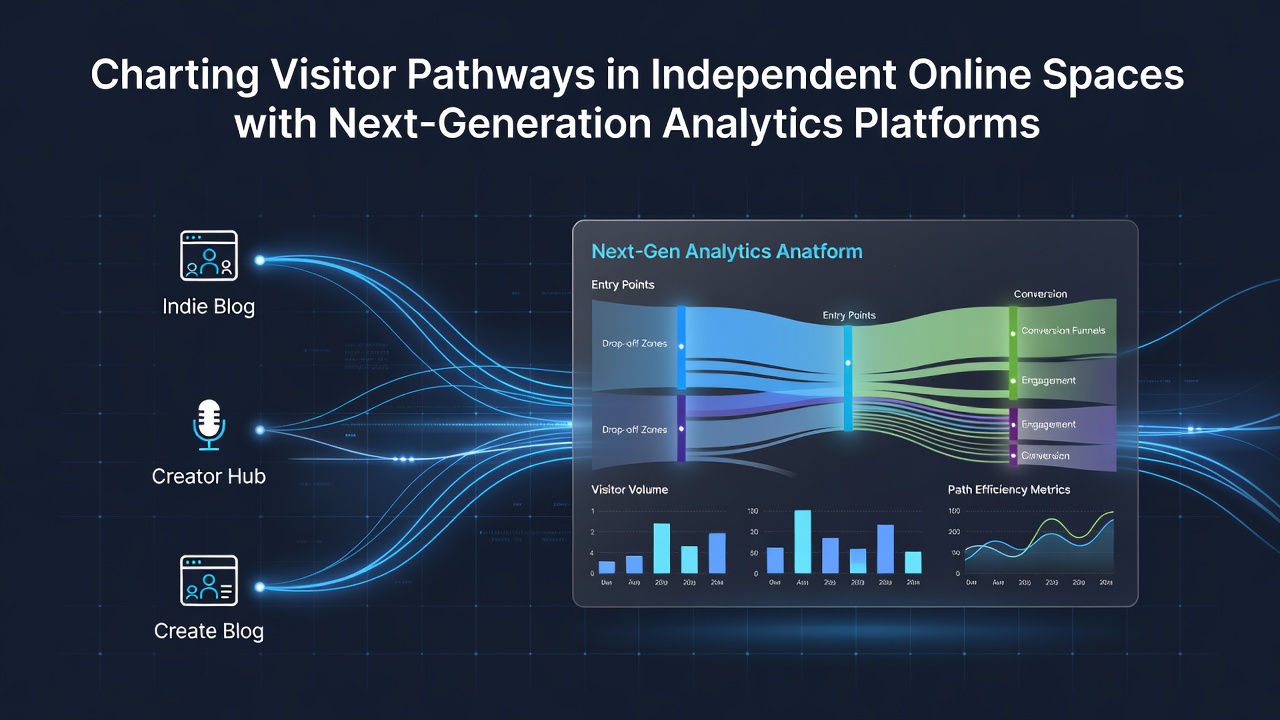
Next-generation platforms address these issues through integrated machine learning models that reconstruct journeys across sessions, and they combine session data with behavioral signals to identify common routes such as entry via blog posts followed by resource downloads and then community engagement sections. Observers note that these systems handle fragmented traffic sources more effectively because they incorporate privacy-compliant data aggregation methods required by regulations in multiple regions.
Core Capabilities of Modern Analytics Platforms for Niche Sites
Advanced platforms now offer real-time path reconstruction that updates as visitors progress, and they integrate cross-device tracking while respecting consent frameworks established by bodies such as the Office of the Privacy Commissioner of Canada. These tools allow operators of independent sites to segment pathways by traffic origin, device type, and time spent on specific sections without relying on third-party cookies that have become restricted in many jurisdictions.
Studies from research institutions indicate that platforms equipped with graph-based analytics can detect loops where users return to earlier pages before converting, and they highlight exit points that occur after users explore particular content clusters. In November 2026, several platforms released updates that added predictive modeling layers, enabling forecasts of likely next steps based on historical aggregates from similar independent sites across Europe and North America.
Implementation Patterns Across Different Independent Projects
Operators of specialized knowledge bases often deploy these platforms by first establishing baseline metrics for entry pages, after which they layer in event tracking for interactions such as search queries within the site and downloads of supplementary materials. One project focused on regional history archives demonstrated how pathway data revealed that visitors from academic referral links spent longer sequences exploring interconnected topic pages compared with those arriving through search engines.
Another instance involved a collective of independent creators who used the same platforms to monitor how users transitioned from portfolio sections to contact forms, and the resulting maps helped adjust navigation structures while maintaining compliance with data protection standards from the Australian Competition and Consumer Commission. These examples illustrate how the technology adapts to varied content structures without imposing uniform templates.

Data Integration and Privacy Considerations
Next-generation systems incorporate server-side processing options that reduce client-side data collection, and they align with evolving standards that limit persistent identifiers across independent online spaces. Reports from the OECD highlight increasing adoption of these methods among smaller digital ventures seeking to maintain detailed pathway insights while meeting international privacy benchmarks.
Integration typically involves connecting the analytics platform to existing content management systems through APIs, which allows continuous updating of pathway visualizations as new content categories are added. Those who manage multiple independent sites have found that unified dashboards can compare pathway similarities across projects, revealing shared patterns in how audiences discover and explore niche material.
Conclusion
Next-generation analytics platforms have expanded the ability to chart visitor pathways within independent online spaces by combining advanced modeling techniques with privacy-respecting data practices, and ongoing developments continue to refine how operators understand movement through standalone digital environments. The combination of real-time reconstruction, predictive elements, and regulatory alignment provides structured information that supports navigation adjustments and content organization without compromising user protections across regions.